
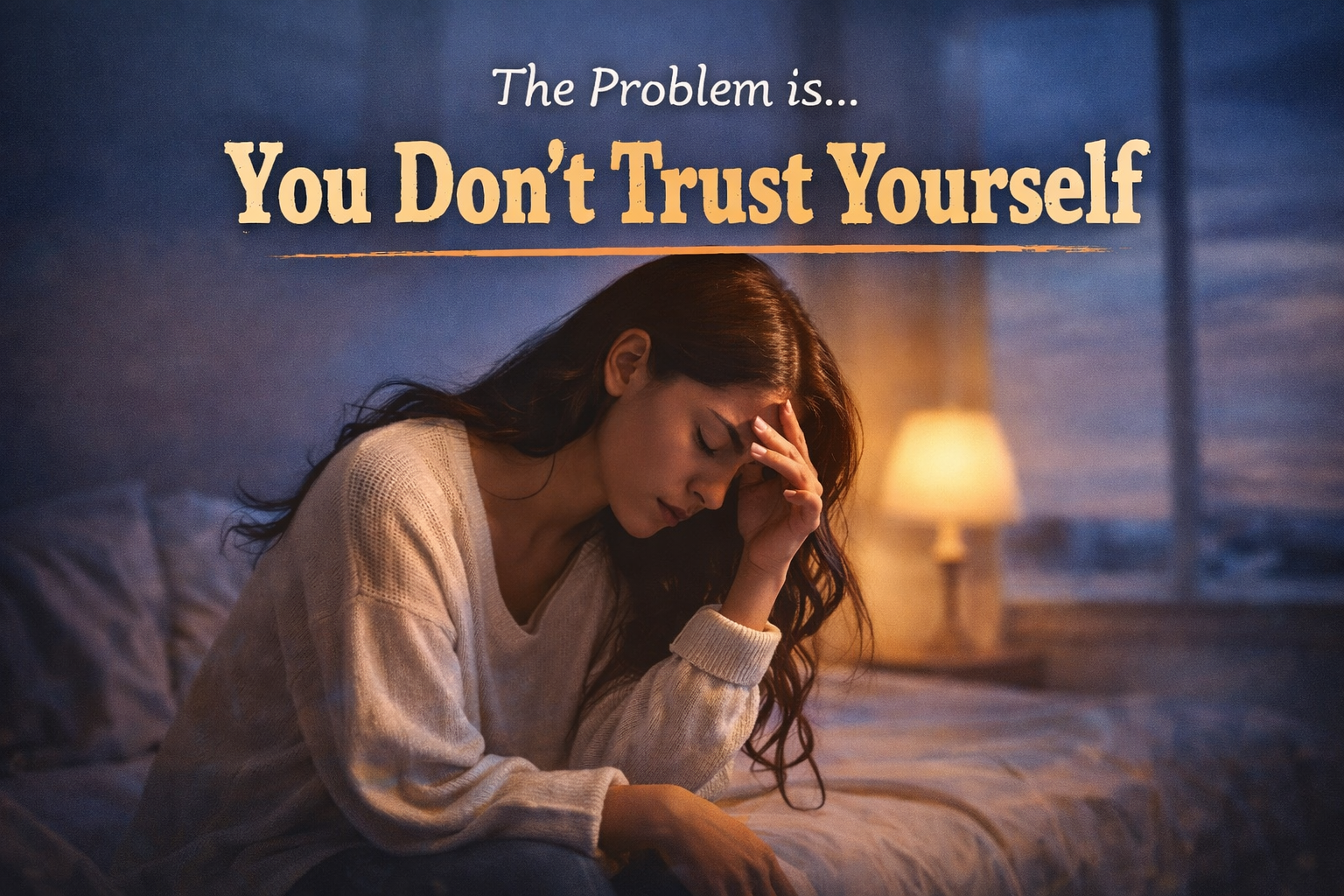
Silently… helplessly… desperately… during night… sometimes during the day… we are always asking from God —
“God please get this thing right… please do this for me… get me a job… a beautiful relationship… God please make everything alright.”
And I’m not judging that prayer. I’ve said it too.
But can I say something a little uncomfortable?
The real problem is not that God is not listening.
The real problem is — you don’t trust yourself.
You don’t trust your decisions.
You don’t trust your timing.
You don’t trust your ability to handle what you’re asking for.
And that changes everything.
Let’s go deeper.
When you say, “God please give me a job,” what you’re actually saying underneath is:
“I don’t trust that I can prepare well enough.”
“I don’t trust that I can handle rejection.”
“I don’t trust that even if I get it, I’ll survive the pressure.”
When you say, “God please give me a good relationship,” what’s hiding under that?
“I don’t trust my judgment in choosing the right person.”
“I don’t trust that I won’t ignore red flags again.”
“I don’t trust that I am enough to be loved without performing.”
See? It’s not about the job.
It’s not about the relationship.
It’s about self-trust.
Why Don’t You Trust Yourself? (Let’s Go to the Root)
This didn’t start yesterday.
1. You Were Taught to Doubt Yourself Early
Maybe when you were a child, every decision you made was corrected.
You chose a dress — “That doesn’t look good.”
You picked a subject — “Are you sure? That has no scope.”
You liked someone — “He’s not good enough.”
Slowly, your brain learned one thing:
“Others know better. I don’t.”
So now as an adult, even when you feel something strongly, you second-guess it.
You call three friends before making a decision.
You google 25 reviews before buying something simple.
You need validation for choices that your gut already knows.
That’s not overthinking.
That’s trained self-doubt.
2. You Broke Your Own Promises Too Many Times
This one hurts, but let’s be honest.
You said you’ll wake up at 6. You didn’t.
You said you won’t text him again. You did.
You said you’ll start that course. You postponed it.
Now imagine this:
If someone keeps breaking promises to you again and again, will you trust them?
No.
Your brain treats you the same way.
Self-trust is not built by motivation.
It’s built by kept promises.
When you repeatedly don’t follow through, your subconscious says:
“She says things. She doesn’t mean them.”
And that’s when anxiety increases. Because now you don’t even trust yourself to show up.
3. You Were Punished for Mistakes
Maybe when you failed once, it was not treated as learning.
It was treated as:
“You always do this.”
“You can’t handle responsibility.”
“See, I told you.”
So now your brain thinks:
“If I make a decision and it goes wrong, it means I am wrong.”
That’s dangerous.
Because then you stop deciding.
You delay.
You pray that someone else chooses for you.
Because if God chooses and it fails, it’s not your fault.
But if you choose and it fails?
That feels unbearable.
4. You Confuse Fear With Intuition
This is big.
You think you’re “being careful.”
Actually, you’re being afraid.
Example:
You want to apply for a better job.
But a voice says, “What if you’re not good enough?”
You call it intuition.
It’s not intuition. It’s fear.
Intuition feels calm.
Fear feels urgent and dramatic.
But when you don’t trust yourself, you can’t differentiate the two.
So you stay stuck.
Now let me tell you something important.
Trusting yourself doesn’t mean you’ll never make a wrong decision.
It means even if you do, you trust that you can handle the consequences.
That’s power.
So What Do You Actually Do? (Not Generic Advice. Real Steps.)
Not “just believe in yourself.”
That doesn’t work.
Here’s what works:
Start With Tiny Promises
Don’t say, “From tomorrow I’ll change my life.”
Say:
“I will drink one glass of water after waking up.”
That’s it.
Do it for 7 days.
Your brain starts collecting evidence:
“She does what she says.”
Self-trust is built through evidence, not affirmations.
Make One Decision Without Asking Anyone
Small one.
Order what you want at a restaurant without polling the table.
Choose a book without reading 40 reviews.
Pick a workout and stick to it for 2 weeks.
Then observe.
Did the world collapse?
No.
Your nervous system needs experiences of safe independence.
Redefine Failure
Next time something goes wrong, instead of:
“I’m so stupid.”
Say:
“Okay. That didn’t work. What did I learn?”
Write it down.
Because when you extract learning, your brain feels control.
And control builds trust.
Let me say something very directly.
You are not praying because you’re spiritual.
Many times you’re praying because you’re scared to rely on yourself.
And I’m not saying stop praying.
Pray. But after praying, act.
Instead of:
“God please make everything alright.”
Say:
“God, give me the strength to handle whatever comes.”
That one sentence shifts you from helpless to powerful.
You don’t need a different life.
You need a different relationship with yourself.
The day you trust yourself, even uncertainty won’t scare you.
Because you’ll know:
“Whatever happens… I can handle it.”
And that’s when things actually start falling into place.
Not because God suddenly started listening.
But because you finally did.